
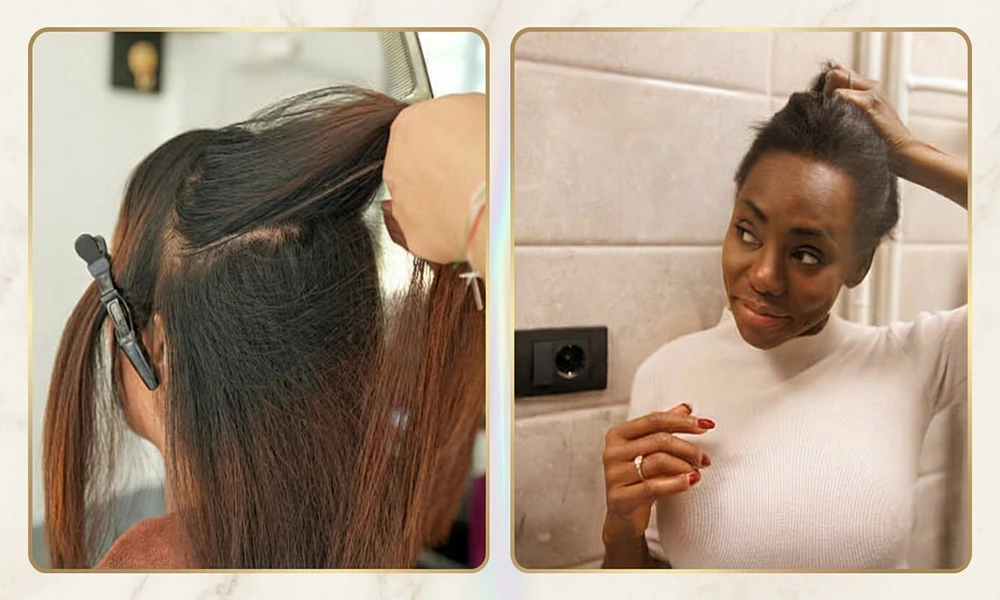
Seeing extra hair in the comb, shower, sink, or on your shoulders can feel stressful, especially when your hair is relaxed and already needs careful handling. Extensions can be a beautiful way to enjoy fullness, length, and protective styling, but they should never leave your natural hair feeling weaker, thinner, or uncomfortable. The goal is not to panic every time you see shedding, because some shedding is part of a normal hair cycle. The real question is whether your hair is shedding in a way that feels unusual for you. If your scalp feels sore, your edges are thinning, your leave-out is breaking, or your hair feels fragile after takedown, it may be time to pause and give your strands the care they need before your next install.
Understand What Your Relaxed Hair Is Trying to Tell You
Textured and natural hair already has bends, curves, and delicate points along the strand, and when hair is chemically relaxed, it can become even more vulnerable to dryness, friction, and breakage. That does not mean you cannot wearRelaxed Hair Extensions, but it does mean your install, maintenance routine, and takedown process matter a lot.
Normal shedding usually comes from the root and may happen during wash day, detangling, or after wearing a style for a while. Breakage, on the other hand, often shows up as shorter pieces of hair with no white bulb at the end. If you are seeing tiny broken strands around your sink, pillow, or shoulders, your hair may not just be shedding naturally. It may be reacting to dryness, tension, heat, rough brushing, or being left in a style too long.
When Shedding May Be Normal and When to Pay Attention
A little hair coming out during combing or washing can be normal, especially if your hair has been tucked away for days or weeks. When your hair is in an install, loose shed hairs may not fall away daily like they normally would. So when you finally wash, brush, or remove the style, it can look like more hair is coming out at once.
The concern begins when the shedding feels excessive for your usual routine. For example, if your hair is coming out in clumps, your part looks wider, your ponytail feels thinner, or your edges are no longer as full, those are signs worth taking seriously. Relaxed hair needs balance, and too much styling stress can push already delicate strands into a weaker state.
For women with textured or natural hair who want a softer straight look without the long-term pressure of a sew-in,Relaxed Straight Hair Clip Ins may feel like a more flexible option because they can be removed at night and do not have to stay attached to the hair for weeks. Still, even temporary pieces should be installed gently and removed with care.
Signs Your Hair May Need a Break
Your hair will usually give you signs before it reaches a serious damage point. The key is to pay attention early instead of forcing another install because you want to keep the same look. Taking a break does not mean extensions are bad for you. It simply means your hair may need recovery time.
You may need a break if you notice:
- More shedding than usual during wash day or takedown
- Thinning edges or a weaker hairline
- Scalp tenderness, soreness, or bumps after installation
- Breakage around the leave-out or crown area
- Dry, stiff, or brittle strands after removing the style
- Itching, flaking, or scalp irritation that does not improve
- Your hair feeling thinner, weaker, or harder to style than before
If any of these signs keep repeating, your hair may be asking for less tension and more moisture. This is especially important for relaxed hair because chemical processing can reduce the hair’s natural strength if it is not cared for properly. A healthy scalp and strong strands should always come before the next style.
How to Take a Healthy Break Without Feeling Stuck
A break from extensions does not have to mean boring hair or walking around feeling unfinished. Think of it as a reset period. Your hair is getting the chance to rebuild moisture, reduce tension, and recover from pulling, heat, manipulation, or dryness. This is the time to focus on simple styles that do not stress your scalp.
During your break, try to keep your routine gentle and consistent:
- Deep condition regularly to restore softness and flexibility
- Trim weak or split ends so breakage does not travel upward
- Moisturize and seal your relaxed strands to reduce dryness
- Massage your scalp lightly to support comfort and circulation
- Avoid tight ponytails, heavy buns, and high-tension protective styles
- Limit heat styling while your hair is recovering
- Use a satin scarf, bonnet, or pillowcase at night
You may also want to wear low-manipulation styles such as soft wraps, loose roller sets, gentle braid-outs, tucked ends, or relaxed hair buns that are not pulled too tight. If your scalp is painful, inflamed, or your hair loss seems sudden or severe, it is wise to speak with a licensed stylist, trichologist, or dermatologist for personal guidance.
The Bottom Line
Taking a break from straight textured extensions can be one of the smartest choices you make for your relaxed hair. It is not a failure, and it does not mean you have to stop wearing added hair forever. It simply means you are choosing long-term hair health over forcing a style when your strands are asking for rest.
When your hair feels stronger, your scalp feels calm, your edges look fuller, and your shedding feels back to normal, you can return to extensions with better habits. Choose low-tension installs, avoid leaving styles in too long, moisturize consistently, and be gentle during takedown. Beautiful hair should not cost you healthy hair, and listening to your relaxed strands is always part of a confident, caring hair routine.