
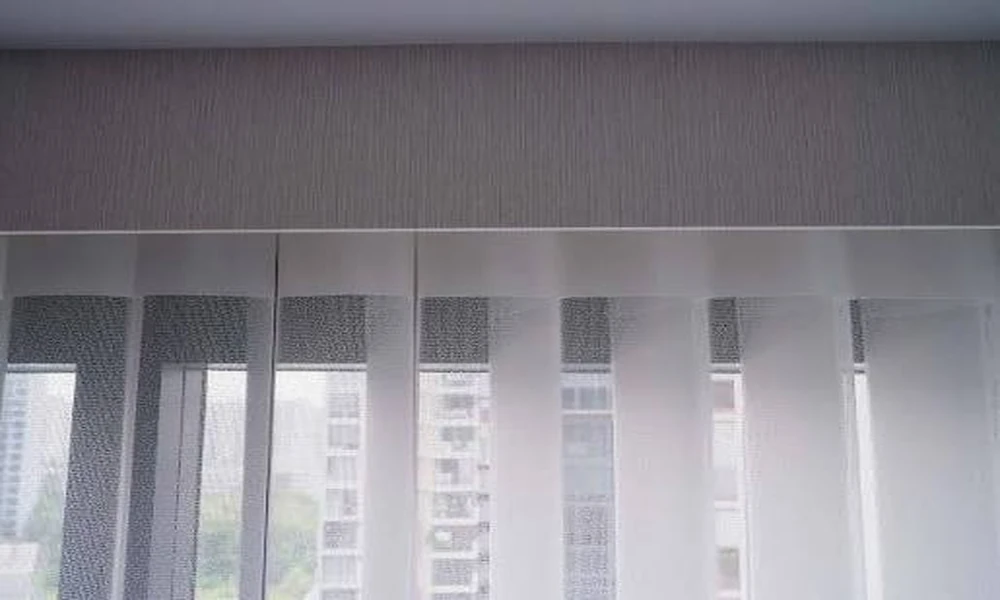
A fifth-floor flat with its living room facing west makes a useful test case. At seven in the morning it is dim and cool; by four in the afternoon the sofa is too hot to sit on. Anyone browsing singapore blinds and curtains for a home like this is not really choosing fabric. They are choosing how each room will cope with a sun that moves, neighbours who can see in, and rain that arrives sideways with ten minutes’ notice.
Seven in the Morning: The East Bedroom
The day begins in the children’s room, which catches the first light. Here the complaint is early waking. A roller blind fitted inside the window recess leaves bright slits down both edges, enough to rouse a light sleeper. Mounting the blind outside the recess with an overlap, or pairing it with a lined curtain that returns to the wall, closes those slits. The lesson of this room is that darkness depends on edges more than on how opaque the cloth is.
Nine O’Clock: The Kitchen and Service Yard
Steam, grease and damp laundry define the back of the flat. Fabric curtains here absorb smells and spot with mould. Wipe-clean materials make more sense: PVC or aluminium slats, or a coated roller blind that tolerates a wet cloth. The window over the sink is opened and closed all day, so whatever hangs there must lift clear quickly. Cords should be short and secured, particularly where a stool lets small children reach the worktop.
Noon: The Study Facing the Corridor
The study window looks onto the common corridor, a familiar feature of older blocks. Passers-by are an arm’s length away. The need is privacy with daylight, since nobody wants a lamp on at midday. Blinds with adjustable bands or tilting slats answer it: angle them and the room is screened at eye level while light still enters from above. A sheer alone works by day but turns transparent the moment the desk lamp is switched on after dark.
Four in the Afternoon: The Living Room
Now the west sun reaches its worst. Glass sliding doors act as a radiator, and the air-conditioner labours. This room usually justifies two layers: a sheer or sunscreen fabric to cut glare while keeping the view, and a heavier lined curtain to draw when the heat peaks. Comparing options with a home curtain and blinds specialist is worthwhile here, because the choice between a double track, a blind behind a curtain, or a single thermal-lined drape changes both the cost and the look.
Five O’Clock: The Balcony Before the Storm
Clouds build quickly. On the balcony, cushions and a shoe rack sit exposed. Indoor products are no use out here; this is the territory of outdoor blinds made from PVC or mesh, often running in side channels so wind cannot whip them about. Before ordering, the owners must check what their housing estate permits. HDB and condominium management bodies commonly restrict what may be fixed to a balcony or seen from outside, and some specify approved designs or colours.
Seven in the Evening: Lights On, Neighbours Opposite
After sunset the flat becomes a lit stage for the block across the car park. Every window that relied on a sheer during the day now needs a second line of defence. Walk through with the lights on and look back from the balcony: wherever furniture and people are plainly visible, something denser is required. This simple evening inspection catches the rooms where a daytime showroom decision would otherwise leave the household on display.
Eleven at Night: The Main Bedroom
The final stop is the room where sleep matters most. Street lamps and the corridor light leak in. Blackout lining stops light passing through the cloth, though not around it, so the curtain should be wider and longer than the window and sit close to the wall at each end. A pelmet or ceiling-fixed track blocks the glow that escapes over the top. Heavier lined curtains also take a slight edge off traffic noise, a modest but welcome side effect.
Humidity, Dust and the Washing Question
Across every room the climate imposes its own rules. Thick natural fibres in a closed, damp room can develop mildew along the lining. Synthetic blends dry faster and tolerate machine washing. Blinds gather dust on each slat or band and need a regular wipe. Before choosing, ask how each item is cleaned, whether it can be taken down by one person, and how long it takes to dry. An honest answer rules out some attractive but impractical choices.
Hands, Cords and Motors
Think about who operates each covering. A tall drape behind a sofa is awkward to reach; a wand or a motor solves it. Looped cords and chains are a known hazard for toddlers and should be tensioned to the wall or avoided in children’s rooms. Motorised tracks and blinds need a power supply, which is far easier to provide during renovation than afterwards. Deciding this early prevents trailing cables and surface trunking later.
Turning the Walk-Through Into an Order
Write one line per room: what the sun does there, who can see in, how damp it gets and who will operate the covering. Take that list, not a mood board, to the showroom. Ask for the mounting method and overlap in writing, confirm estate rules for anything visible from outside, and request fabric samples to view at home in afternoon light. Approached this way, singapore blinds and curtains stop being a decorating purchase and become a room-by-room answer to how the flat is lived in.