
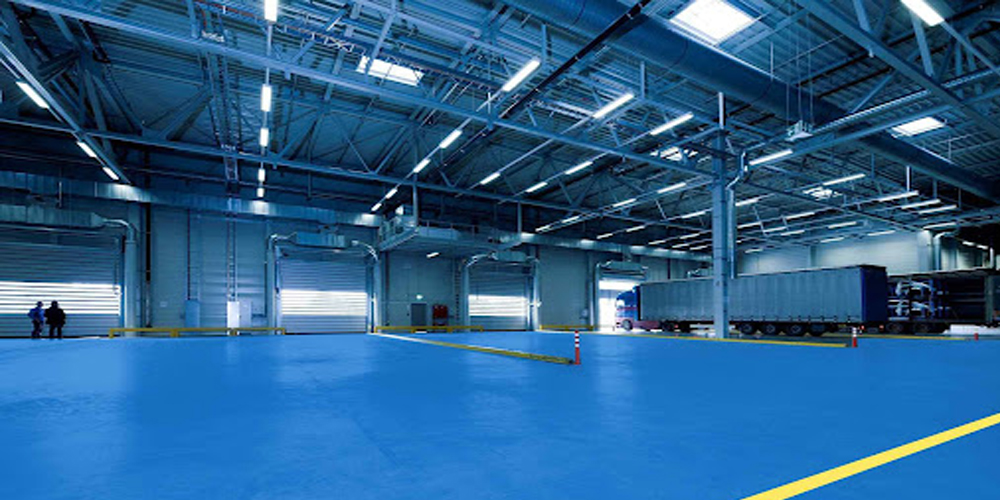
The story of epoxy flooring begins not with floors at all, but with a question that has preoccupied chemists since the dawn of polymer science: how might we create a material that binds with the tenacity of living tissue yet possesses the resilience of stone? Like the discovery of penicillin or the mapping of DNA, the development of epoxy flooring emerged from understanding molecular architecture at its most fundamental level. What results is a material that flows like water during installation, yet hardens into a surface of remarkable integrity, a transformation as profound as any metamorphosis in nature. This flooring system, born from the marriage of resin and hardener, has migrated from industrial warehouses into hospitals, laboratories, homes, and retail spaces, each application revealing new dimensions of its capabilities.
The Molecular Foundation
At its essence, epoxy flooring represents a triumph of chemistry over entropy. Two components, each inert in isolation, combine to trigger a cascade of molecular bonding that locks them into a three-dimensional network of extraordinary strength. The process resembles cellular growth in its inexorability, molecules linking to molecules in patterns that repeat across the surface like the replication of genetic code.
This chemical genesis produces properties that seem almost paradoxical in their range:
- Compressive strength that rivals concrete whilst remaining lighter and more flexible
- Chemical inertness that resists acids, alkalis, and petroleum products
- Seamless continuity that eliminates the vulnerable joints found in tiled surfaces
- Adhesion so complete that the flooring becomes inseparable from its substrate
- Customisable thickness from millimetres to centimetres depending on application requirements
In Singapore’s environment, where humidity approaches saturation and temperatures remain elevated year-round, epoxy flooring has proven remarkably adaptive. The material’s impermeability to water prevents the gradual infiltration that compromises concrete and erodes steel, a form of molecular defence that protects the substrate beneath as effectively as skin protects underlying tissue.
The Clinical Imperative
Consider the hospital corridor, that liminal space where healing and infection wage their eternal battle. Here, epoxy flooring serves not merely as a surface but as a defence system. The seamless nature eliminates crevices where pathogens might establish colonies. The non-porous surface prevents bacterial penetration, creating what microbiologists term an inhospitable environment for microbial survival.
In pharmaceutical facilities and food processing plants throughout Singapore, epoxy flooring has become nearly ubiquitous, not through fashion but through necessity. Regulatory standards demand surfaces that can withstand repeated chemical cleaning without degradation. The flooring must resist not only the mechanical stresses of daily operations but also the chemical assault of industrial cleaning agents, much as the stomach lining resists its own digestive acids through specialised cellular adaptations.
Industrial Resilience
The industrial applications of epoxy flooring reveal its capacity to endure extraordinary stresses. Manufacturing facilities subject floors to loads that would pulverise conventional materials within months. Forklifts traverse the same paths thousands of times, their steel wheels concentrating tremendous pressure onto small contact areas. Chemical spills, dropped tools, thermal cycling from machinery, all assault the surface continuously.
Yet properly installed epoxy flooring absorbs these insults with minimal degradation. The material’s elastic properties allow it to flex under impact rather than fracture, distributing forces across its molecular network. This resilience emerges not from rigidity but from flexibility, a principle observed throughout nature in materials from bone to bamboo.
The Aesthetic Dimension
To speak only of epoxy flooring’s functional qualities ignores its remarkable aesthetic versatility. The material accepts pigmentation as readily as a canvas accepts paint. Metallic additives create shimmering effects reminiscent of polished stone. Decorative chips suspended in clear topcoats produce patterns of unexpected beauty, transforming utilitarian surfaces into design elements.
This aesthetic flexibility has driven epoxy flooring’s adoption in residential spaces. Garage floors, once regarded as purely functional, become showroom surfaces. Basements transform from damp, neglected spaces into habitable rooms. The glossy finish reflects light, brightening environments whilst creating an impression of expanded space.
The Installation Narrative
Installing epoxy flooring follows a protocol as precise as any surgical procedure. Surface preparation determines ultimate success or failure. Concrete must be profiled to specific roughness parameters, ensuring mechanical keying between substrate and coating. Moisture testing confirms the slab’s readiness to receive the epoxy system. Any deviation from protocol risks delamination, the premature separation of coating from substrate that constitutes complete system failure.
The application itself demands attention to environmental variables. In Singapore’s climate, applicators must account for temperature and humidity effects on curing kinetics. Too hot, and the epoxy gels before proper levelling occurs. Too humid, and moisture interferes with the curing reaction, compromising final properties. The work proceeds in stages, each layer building upon the last, creating thickness and protection incrementally.
Longevity as Investment
From an economic perspective, epoxy flooring represents an inversion of conventional thinking about flooring costs. Initial expenditure exceeds that of many alternatives, yet lifecycle costs favour epoxy dramatically. Systems properly installed in Singapore’s commercial facilities routinely exceed 20 years of service. Maintenance remains minimal throughout this period, requiring only regular cleaning rather than periodic replacement.
Conclusion
The evolution of epoxy flooring from industrial necessity to versatile building material mirrors broader patterns in material science: solutions developed for extreme conditions often prove valuable in everyday applications. What began as a response to industrial flooring challenges has become a comprehensive system serving needs from sterile laboratories to residential living spaces. In Singapore and across diverse climates, property owners increasingly recognise that investing in durable, long-lasting surfaces offers not merely immediate benefits but sustained value across decades. The choice to install epoxy flooring represents a decision to prioritise performance and longevity, acknowledging that some investments reward patience with enduring quality and reliable service that extends far beyond the initial installation, transforming ordinary floors into surfaces of lasting utility and unexpected beauty through the elegant application of polymer chemistry in the service of human needs, making epoxy flooring an increasingly intelligent choice for those who value both form and function in equal measure.